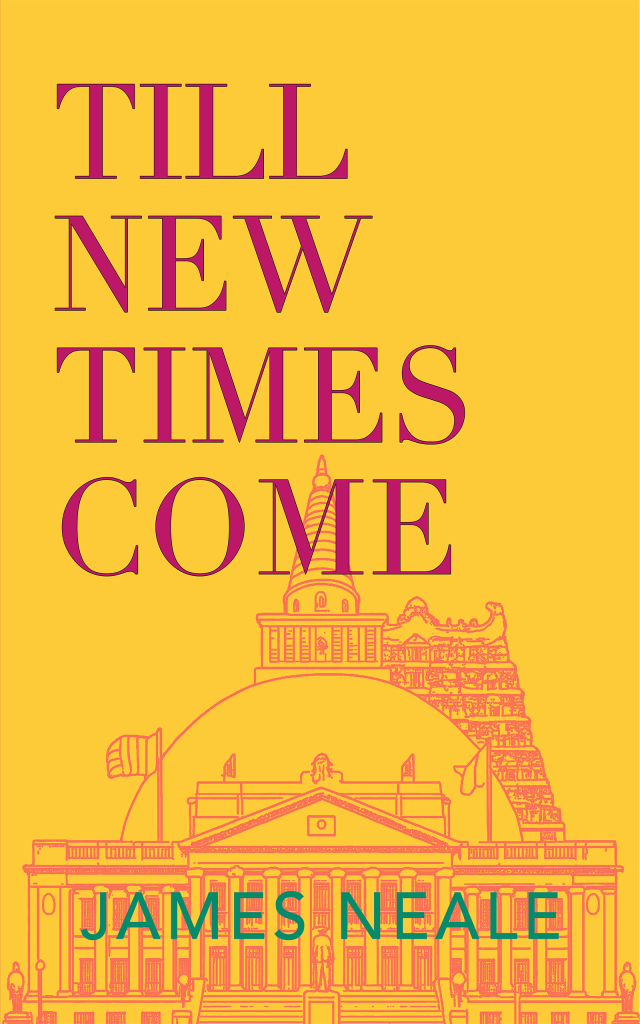
In July 1957, Ceylon’s Prime Minister and the leader of the Federal Party reached an agreement on language and regional government. Less than a year later, it lay abandoned. What did the Bandaranaike–Chelvanayakam Pact offer, and why does its failure still matter?

Some turning points in history announce themselves through an election, an assassination or an outbreak of violence. Others take the quieter form of an agreement that never becomes law. The Bandaranaike–Chelvanayakam Pact belongs to that second category: an attempt at accommodation remembered largely for its destruction.
Its significance lies in a question that remains difficult to answer. Had the agreement been implemented, could it have established enough trust to make later compromises possible?
The search for a compromise
S.W.R.D. Bandaranaike became Prime Minister in 1956 after a campaign that promised to make Sinhala the country’s sole official language. For many Sinhala speakers, the change represented an overdue challenge to the privileges associated with English under colonial rule. For Tamil speakers, it raised fears about their place in public administration and national life.
The Official Language Act sharpened these divisions. Tamil opposition included the Federal Party, led by S.J.V. Chelvanayakam, which advocated a federal arrangement. Language, political representation and the distribution of state power were becoming inseparable questions. rc-services-assets.s3.eu-west-1.amazonaws.com
The negotiations of 1957 began with substantial disagreement. Bandaranaike would not accept a federal constitution or repeal the Official Language Act. Chelvanayakam’s party continued to uphold its objectives, but agreed to explore an arrangement that fell short of them. satp.org
This was the essential achievement of the talks. Each side was prepared to consider something it could accept immediately without pretending that its larger disagreement had disappeared.
What did the pact propose?
The Bandaranaike–Chelvanayakam Pact, concluded in July 1957, envisaged directly elected regional councils. Parliament would delegate powers over specified subjects, including agriculture, education, health, housing and roads. Councils would also have responsibilities concerning land settlement, including the selection of people receiving land within their areas.
The agreement provided for Tamil to be used in administration in the Northern and Eastern Provinces, with safeguards for people there who did not speak Tamil. Sinhala’s position under the Official Language Act would remain. The proposed councils would receive central grants and have powers of taxation and borrowing. peaceinsrilanka.lk
These provisions concerned the everyday experience of government: the language in which someone could approach an official, the institutions responsible for local services, and decisions about land. They offered practical substance to the idea that different communities could share a state.
The pact did not settle every grievance. Citizenship affecting people of Indian descent was raised, but received a promise of consideration rather than a solution. Important details still required legislation. Nevertheless, the Federal Party agreed to withdraw its proposed campaign of non-violent resistance. satp.org
Why was it opposed?
The agreement faced resistance from Sinhala nationalist opponents, including Buddhist monks and figures within the government’s own political camp. The opposition United National Party also attacked it. In October 1957, J.R. Jayewardene led a protest march intended to reach Kandy. Although the march was stopped before reaching its destination, it helped mobilise opposition to the pact. www.ft.lk
Bandaranaike faced a problem partly created by the politics that had brought him to office. A concession could be presented as a retreat from the promises of 1956. Opponents could describe regional government as a threat to national unity, rather than an attempt to secure it.
Yet explaining that pressure does not remove his responsibility. Negotiation required him to persuade people beyond the room in which the agreement was reached. The pact needed legislation, political allies and a sustained public defence. His willingness to sign it had to be matched by a willingness to carry it through.
The agreement abandoned
On 9 April 1958, monks and other protesters gathered outside Bandaranaike’s residence, demanding that he revoke the agreement. He yielded and symbolically tore up a copy. The pact was abandoned before its proposed institutions could be tested. www.dailymirror.lk
The scene has enduring force because it makes a complicated political failure visible. An agreement negotiated between leaders was discarded under pressure outside one leader’s home.
The deeper loss was credibility. A negotiating partner must be able to show that accepting a compromise can produce results. When the agreement disappeared, Chelvanayakam had less to offer those who questioned the value of negotiation. That is an interpretation of the pact’s legacy, rather than proof that every later development followed inevitably from its collapse.
What opportunity was lost?
In May 1958, widespread communal violence brought further suffering, with Tamils the principal victims. The government subsequently passed the Tamil Language (Special Provisions) Act, but the regional council settlement envisaged by the pact did not follow. www.dailymirror.lk
It would be too simple to draw a straight line from April 1958 to the civil war that began a quarter of a century later. Many subsequent decisions, confrontations and acts of violence shaped that conflict. Nor can anyone demonstrate that regional councils would have worked as intended.
The more defensible argument is that the pact offered an opportunity to learn whether accommodation could work. Implemented fairly, it might have given citizens experience of shared institutions and negotiators a reason to return to the table. Difficulties could then have been addressed through an existing arrangement, rather than through another attempt to begin again.
Its abandonment denied the country that test. The failure was therefore more than the loss of a particular administrative scheme. It weakened the proposition that political leaders could make concessions, honour them and retain the authority to govern.
That is why the Bandaranaike–Chelvanayakam Pact deserves to be remembered as a missed opportunity. It offered no guarantee of peace. It offered a concrete agreement through which peace might have been pursued—and which neither community was allowed to judge by its results.
recent POSTS
Explore the history behind Till the New Times Come
- Why Was S.W.R.D. Bandaranaike Assassinated?
- From Oxford to Sinhala Nationalism: The Contradictions of S.W.R.D. Bandaranaike
- The Buddhist Monk Who Assassinated a Prime Minister
- The Sinhala Only Act of 1956
- Could Bandaranaike Have Prevented Sri Lanka’s Civil War?
- The Bandaranaike–Chelvanayakam Pact: A Missed Opportunity?
- Why I Wrote a Novel About Bandaranaike’s Final Twenty-Four Hours
- History and Imagination: Writing the Future into Bandaranaike’s Final Hours
- Why Till the New Times Come Takes Its Title from a Poem