
Educated in England and raised among Ceylon’s privileged elite, S.W.R.D. Bandaranaike became the champion of Sinhala language and Buddhist cultural revival. His remarkable political transformation helped reshape the country — but left a legacy of unresolved contradictions.
In the spring of 1956, Solomon West Ridgeway Dias Bandaranaike achieved one of the most remarkable electoral victories in Ceylon’s history.
His coalition swept to power promising to restore the language, religion and cultural identity of the Sinhalese Buddhist majority. The victory marked a decisive shift away from the English-speaking establishment that had governed the country since independence in 1948.
Yet Bandaranaike himself was a product of that very establishment.
Born into one of Ceylon’s wealthiest and most influential families, educated in English, raised as an Anglican and sent to Oxford University, he seemed an unlikely figure to lead a movement against the privileges of the Westernised elite.
How did this English-educated gentleman become the champion of Sinhala nationalism? And what does his transformation tell us about the political forces that shaped modern Sri Lanka?
A privileged colonial upbringing
Bandaranaike was born on 8 January 1899 into a family whose wealth and status were closely associated with British colonial rule.
His father, Sir Solomon Dias Bandaranaike, served as Maha Mudaliyar, a prestigious position within the colonial administration. The family’s connections gave the young Bandaranaike access to a world far removed from the everyday experience of most Ceylonese.
He was educated initially at home and later at S. Thomas’ College, one of the island’s leading Anglican schools.
English was the language of his upbringing and education. His family belonged to a small, Westernised social class whose members often adopted British manners, dress and institutions.
For the young Bandaranaike, England represented not simply the seat of imperial power but a world of intellectual and social opportunity.
In 1919, he travelled to Britain to study at Christ Church, Oxford.
The Oxford years
Oxford helped shape Bandaranaike’s confidence, intellectual interests and political ambitions.
He became active in student debate and university societies, including the Oxford Union and the Oxford Majlis, an association of Indian students.
His reputation as an accomplished speaker grew during these years. He developed the debating skills and rhetorical style that would later distinguish him in Ceylonese politics.
Oxford also exposed him to arguments about nationalism, self-government and the future of the British Empire.
The years following the First World War were a period of growing anti-colonial sentiment. Indian nationalism was gathering strength, and students from Britain’s colonies were increasingly questioning the political arrangements under which their countries were governed.
Bandaranaike absorbed these debates while remaining deeply influenced by British intellectual and political traditions.
This dual inheritance would remain a feature of his public life. He admired aspects of British parliamentary democracy even as he increasingly argued that Ceylon should recover its own cultural and political identity.
The irony was that the future champion of Sinhala nationalism had acquired much of his political education in the heart of the British establishment.
Returning to Ceylon
When Bandaranaike returned to Ceylon in 1925, he entered politics with advantages unavailable to most aspiring politicians.
His family connections, education and financial independence provided an unusually strong foundation for a public career.
He joined the Colombo Municipal Council in 1926 and entered the State Council in 1931, following the introduction of constitutional reforms that expanded electoral representation.
But he was increasingly aware of the distance separating the English-speaking political elite from the majority of the population.
For decades, fluency in English had been an important route to government employment, education and professional advancement. Those without access to English-language schooling were at a considerable disadvantage.
The resulting inequalities were real. They helped create an audience for politicians who argued that independence would mean little unless ordinary Ceylonese could participate more fully in public life.
Bandaranaike gradually positioned himself as one of those politicians.
The Sinhala Maha Sabha
In 1936, Bandaranaike founded the Sinhala Maha Sabha, an organisation intended to advance Sinhalese cultural and political interests.
The movement reflected his growing conviction that the country’s majority community needed stronger representation and recognition.
This did not initially require a complete rejection of cooperation with other communities. Bandaranaike’s political positions evolved over time, and his earlier public statements included support for broader national unity and linguistic accommodation.
Nevertheless, the Sinhala Maha Sabha gave organisational expression to a form of majority nationalism that would become increasingly powerful.
Bandaranaike was also undergoing a personal transformation.
Raised in an Anglican household, he moved towards Buddhism and increasingly identified himself with Sinhala Buddhist cultural traditions. His adoption of Buddhist observances in the early 1950s symbolised that change.
To supporters, this represented a genuine rediscovery of the cultural inheritance that colonial society had encouraged educated Ceylonese to neglect.
To critics, it raised an uncomfortable question: how much of Bandaranaike’s transformation reflected personal conviction, and how much reflected political ambition?
The distinction is difficult to establish. Political beliefs and political opportunities can develop together, and there is little reason to assume that one necessarily excludes the other.
Breaking with the establishment
Bandaranaike joined the United National Party, which was formed in 1946 and became the governing party when Ceylon achieved independence in 1948.
But his relationship with the party’s leadership became increasingly strained.
The UNP was associated with the English-speaking elite and a cautious approach to political and social change. Bandaranaike believed there was room for a different political movement, one that would appeal more directly to rural voters and the Sinhala Buddhist majority.
In 1951, he resigned from the government and the UNP, subsequently founding the Sri Lanka Freedom Party.
The decision was a major political gamble.
He abandoned the security of an established governing party to create an alternative based on cultural nationalism, social reform and a promise to challenge entrenched privilege.
Within five years, that gamble would carry him to the premiership.
The revolution of 1956
The general election of 1956 transformed Ceylonese politics.
Bandaranaike’s Mahajana Eksath Peramuna coalition mobilised voters around Sinhala language rights, Buddhism, social reform and opposition to the established political order.
Its appeal extended beyond cultural nationalism. Teachers, Ayurvedic physicians, Buddhist monks, rural voters and sections of the working population saw an opportunity to challenge the dominance of an English-speaking minority.
Bandaranaike’s personal background was no longer simply a political liability. His education, command of parliamentary debate and familiarity with the establishment allowed him to confront it on its own terms.
His most consequential promise concerned language.
The Sinhala Only Act of 1956 made Sinhala the sole official language of Ceylon, replacing English.
For many Sinhalese, this represented the end of a system that had privileged English speakers under colonial rule.
For Tamil-speaking citizens, however, it threatened their ability to participate equally in public administration and employment.
The policy therefore addressed one form of inequality while creating or intensifying another.
Bandaranaike had helped bring a previously excluded majority into the centre of political life. But he had done so through a language policy that deepened the insecurity of a substantial minority.
The contradictions of power
Once in office, Bandaranaike confronted the difference between winning an election and governing a divided society.
His supporters expected rapid implementation of the promises that had brought him to power. Tamil political leaders demanded recognition of their community’s language and regional interests.
Bandaranaike attempted to find a compromise.
In July 1957, he signed an agreement with S.J.V. Chelvanayakam, leader of the Federal Party. The Bandaranaike–Chelvanayakam Pact proposed regional arrangements and limited recognition of Tamil in administration.
The agreement was opposed by Sinhala nationalists and influential Buddhist monks, some of whom had helped Bandaranaike win office.
Under mounting pressure, he abandoned the pact in April 1958.
Communal violence later that year revealed how far relations between the country’s communities had deteriorated.
Bandaranaike’s predicament was partly of his own making. The political forces he had mobilised were not easily restrained when he sought accommodation with those they regarded as opponents.
The Oxford-educated parliamentarian who understood compromise and constitutional government had become the leader of a movement whose more uncompromising supporters increasingly rejected both.
Conviction, ambition and legacy
It would be easy to dismiss Bandaranaike’s career as a story of political opportunism: a privileged Anglicised aristocrat adopting the language and religion of the majority to gain power.
But that interpretation is incomplete.
The social inequalities against which he campaigned were substantial. The dominance of English had restricted opportunities for many Ceylonese, and the demand for cultural recognition could not simply be dismissed as an electoral invention.
Bandaranaike recognised political and social grievances that the established leadership had been slow to address.
The tragedy lay in the way those grievances were translated into policies and political expectations that made accommodation between communities increasingly difficult.
His life embodied the contradictions of a country emerging from colonial rule.
He was an Anglicised gentleman who challenged Anglicised privilege; a product of British education who championed indigenous culture; a parliamentary democrat who mobilised powerful nationalist passions; and a politician who sought compromise after helping create expectations that made compromise appear like betrayal.
Those contradictions did not disappear with his assassination in September 1959.
They remained embedded in the political landscape of independent Ceylon and continued to influence the country’s subsequent history.
The man behind the political transformation
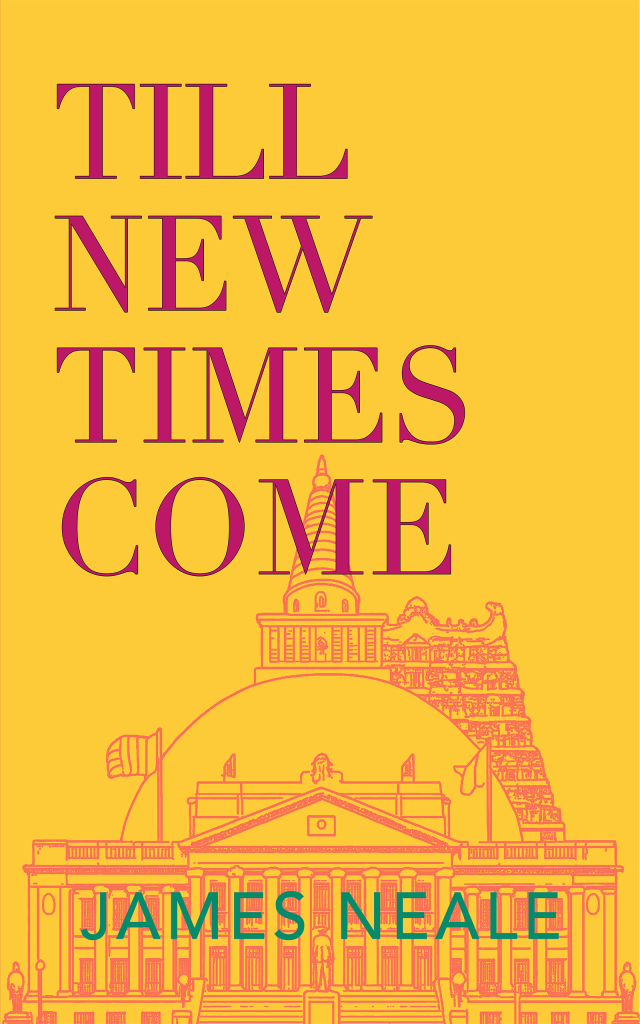
Bandaranaike’s extraordinary journey from Oxford to Sinhala nationalism forms an important part of Till New Times Come, a historical novel by James Neale.
Set during the final twenty-four hours of the Prime Minister’s life, the novel imagines him reflecting on the people, influences and decisions that shaped his career.
Among those memories are his schooldays, his Oxford education, his marriage and his political transformation.
The novel explores the distance between the young man who embraced British intellectual life and the political leader who sought to redefine the identity of his country.
It asks whether Bandaranaike fully understood the forces he had helped unleash — and what he might have thought had he lived to witness their consequences.