
The assassination of Ceylon’s Prime Minister in September 1959 was more than an act of political violence. It exposed a struggle over religion, nationalism, power and the direction of a newly independent nation.
On the morning of 25 September 1959, Solomon West Ridgeway Dias Bandaranaike, the Prime Minister of Ceylon, stepped onto the veranda of his private residence at 65 Rosmead Place, Colombo, to receive visitors.
Among those waiting to see him was a Buddhist monk, Talduwe Somarama Thero. As Bandaranaike approached, the monk produced a revolver and shot him.
The Prime Minister was rushed to hospital, where surgeons struggled to save his life. He died the following morning, aged sixty.
The assassination shocked Ceylon and attracted international condemnation. But the identity of the gunman was only the beginning of the story. Why had a Buddhist monk murdered the politician who, just three years earlier, had come to power promising to restore the language, religion and culture of the Sinhalese Buddhist majority?
The answer lay in a tangled web of political ambition, religious influence, commercial interests and personal resentment.
The election that changed Ceylon
When Bandaranaike became Prime Minister in April 1956, he represented a decisive break with the political establishment that had governed Ceylon since independence in 1948.
Educated at S. Thomas’ College and Oxford University, he belonged to the English-speaking elite that had dominated public life under British rule. Yet he had gradually reinvented himself as the champion of Sinhala language and Buddhist cultural revival.
His Sri Lanka Freedom Party led a coalition to victory on a platform promising to replace English with Sinhala as the country’s official language and give Buddhism a more prominent place in national life.
Buddhist monks played an important part in that victory. Many had become politically active, arguing that the Buddhist majority had been disadvantaged under colonial rule. Their support helped Bandaranaike reach voters who felt excluded from the privileges of the English-educated elite.
Among the most influential of these monks was Mapitigama Buddharakkhitta Thero, the chief incumbent of the Kelaniya Raja Maha Vihara, one of Ceylon’s most important Buddhist temples.
Buddharakkhitta had helped mobilise support for Bandaranaike’s election. Within three years, he would be convicted of conspiring to murder him.
From political allies to enemies
The relationship between Bandaranaike and Buddharakkhitta illustrates the difficulties the Prime Minister faced after his election.
Bandaranaike had benefited from the support of religious leaders who expected his government to advance their interests. But governing a country required compromises that did not always satisfy those who had helped bring him to power.
Buddharakkhitta was no ordinary religious figure. He wielded considerable political influence and had interests extending into business and commercial affairs.
Accounts of the assassination conspiracy describe disputes involving government contracts and commercial opportunities. Buddharakkhitta and his associates had reportedly become frustrated when they failed to secure decisions they wanted from the government.
The subsequent murder trial examined evidence concerning these business interests and their relationship to the political activities of the conspirators.
Yet commercial disappointment alone does not adequately explain the atmosphere in which the assassination took place.
By 1959, Bandaranaike was also facing growing hostility from sections of the Sinhala Buddhist nationalist movement that had helped elect him.
The language question
The most divisive issue of Bandaranaike’s premiership was language.
The Official Language Act of 1956, commonly known as the Sinhala Only Act, made Sinhala the sole official language of Ceylon. The policy was celebrated by many Sinhalese voters as a long-overdue correction of colonial inequalities.
For Tamil-speaking communities, however, it threatened exclusion from government employment, public administration and political life.
The resulting tensions intensified divisions between the country’s communities.
Bandaranaike recognised that some accommodation was necessary. In July 1957, he reached an agreement with the Tamil Federal Party leader S.J.V. Chelvanayakam. The Bandaranaike–Chelvanayakam Pact proposed measures for regional administration and the use of Tamil in specified circumstances.
The agreement provoked fierce opposition among Sinhala nationalists and sections of the Buddhist clergy. Under mounting pressure, Bandaranaike abandoned the pact in April 1958.
Communal violence followed later that year, leaving the country deeply unsettled.
Bandaranaike subsequently attempted to provide for the reasonable use of Tamil through legislation. These efforts reinforced the suspicions of critics who believed he was retreating from the promises of 1956.
The Prime Minister had become trapped between competing expectations: those demanding the full implementation of Sinhala nationalism and those seeking recognition of Tamil rights.
The conspiracy
The criminal investigation that followed the assassination identified a conspiracy involving Buddharakkhitta, Somarama and several associates.
According to evidence presented in the case, Buddharakkhitta persuaded Somarama that Bandaranaike was betraying the Sinhalese people, their religion and their language.
Somarama, an Ayurvedic practitioner as well as a Buddhist monk, was recruited to carry out the shooting. The investigation uncovered evidence concerning the acquisition of a revolver and preparations for the attack.
On 25 September, Somarama went to the Prime Minister’s residence and joined the visitors waiting to speak to him.
Bandaranaike maintained the custom of receiving members of the public at his home. The informality of these meetings, and the respect ordinarily accorded to a Buddhist monk, made the attack particularly shocking.
Somarama shot the Prime Minister at close range.
Even after the shooting, Bandaranaike appealed for restraint rather than retaliation. His response stood in striking contrast to the violence that had brought him down.
The trial and its verdict
The investigation led to a major criminal trial that began in February 1961.
Five defendants stood trial before the Supreme Court of Ceylon. In May, the jury found three men guilty: Talduwe Somarama, Mapitigama Buddharakkhitta and H.P. Jayawardena, a businessman associated with Buddharakkhitta.
Somarama was convicted of murder and conspiracy. Buddharakkhitta and Jayawardena were convicted of conspiracy to murder. Two other defendants were acquitted.
The three convicted men initially received death sentences. Following appeals and subsequent legal developments, Somarama was executed in 1962, while the other two received life sentences.
The trial established criminal responsibility for the assassination. It also exposed the extraordinary degree to which religious authority, political influence and commercial interests had become entangled.
Nevertheless, questions about the relative importance of the conspirators’ motives have continued to interest historians and commentators.
Was Bandaranaike murdered primarily because he frustrated powerful individuals’ commercial ambitions? Because he was perceived to have betrayed Sinhala Buddhist nationalism? Or because personal grievances and political hostility reinforced one another?
The evidence suggests that these explanations should not be treated as entirely separate.
A tragedy of political expectations
There is a profound irony in Bandaranaike’s assassination.
He had risen to power by mobilising forces that challenged the Westernised political establishment. He promised cultural restoration and gave Buddhist monks a more prominent political role. Yet one of the religious leaders who had helped secure his victory became the principal conspirator in his murder.
Bandaranaike was neither simply the victim of forces beyond his control nor solely responsible for the divisions that developed during his premiership.
His language policies helped deepen ethnic tensions, while his attempts at compromise angered influential supporters. His political achievements and misjudgements became inseparable from the crisis that engulfed his government.
His death also left unresolved the central question of his premiership: how could Ceylon accommodate the aspirations of its Sinhala Buddhist majority while protecting the rights and identity of its Tamil-speaking communities?
The decades that followed would give that question tragic significance.
It would be too simple to claim that Bandaranaike’s assassination caused Sri Lanka’s later civil war. But his premiership, the political movements he encouraged and the compromises he could not sustain formed part of the history that led towards it.
The final twenty-four hours
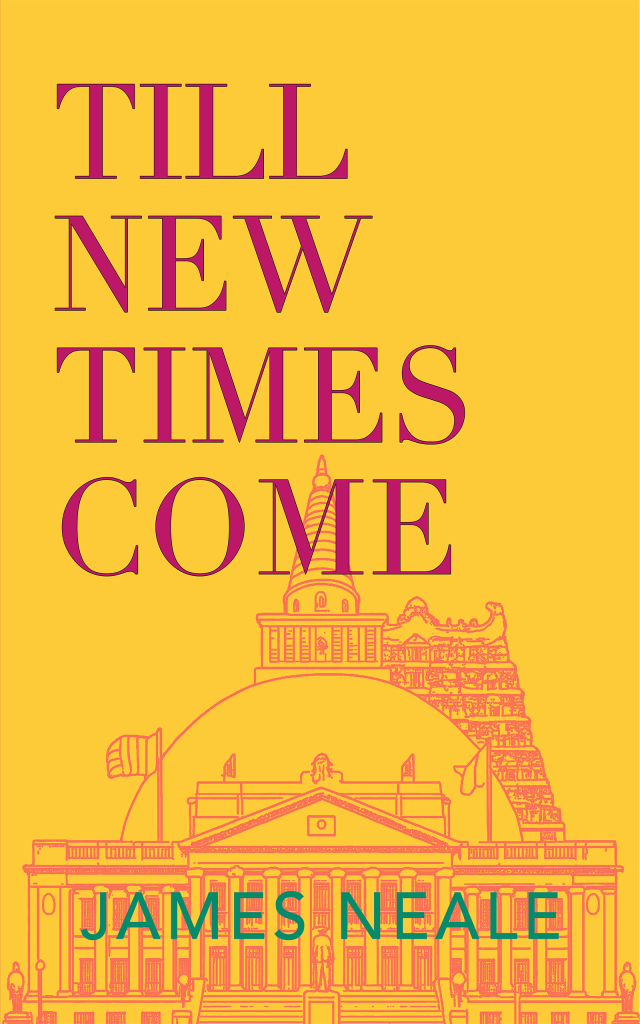
The circumstances of Bandaranaike’s death provide the starting point for Till New Times Come, a historical novel by James Neale.
Set during the Prime Minister’s final twenty-four hours, the novel imagines Bandaranaike looking back over his life: his privileged upbringing, his Oxford years, his political transformation and the decisions that shaped his country.
As he lies in hospital, memories and dreams bring him face to face not only with people from his past but also with figures from Sri Lanka’s future.
The novel asks a question that history cannot answer: what might Bandaranaike have thought if he had been able to see the consequences of the political choices made during his lifetime?
His assassination ended one man’s life. The conflicts surrounding his legacy would continue for generations.