Sinhalese and Tamil history in Sri Lanka is a story of shared lives, cultural exchange and competing ideas of belonging. Yet they have often understood its history—and their place within it—differently. Those differences help explain how a shared country became the setting for competing national claims.

For many Sinhalese, Sri Lanka is the historic home of a distinctive language and Buddhist civilisation: a small island where an inheritance threatened elsewhere survived. For many Sri Lankan Tamils, it is their ancestral country too, with the north and east forming a homeland whose language, culture and political rights require protection.
These views are neither universal nor unchanging. Both communities contain different political traditions, religious affiliations and experiences. Nevertheless, the tension between them has shaped modern Sri Lanka: should the country express the historical identity of its majority, or should it recognise several peoples with claims to belonging and political power? Oxford Academic
Before the dividing lines
The island’s history began long before the emergence of recognisable Sinhalese and Tamil communities. Its indigenous Vedda, or Wanniyala-Aetto, people are a reminder that the past cannot be reduced to a contest between its two largest ethnic groups.
Nor did either community arrive fully formed in a single migration. Over centuries, people crossed the narrow waters separating Sri Lanka from the Indian subcontinent as settlers, traders, soldiers, religious teachers and marriage partners.
Sinhala developed as an Indo-Aryan language, while Tamil belongs to the Dravidian language family. That distinction matters culturally, but it does not establish two populations with entirely separate ancestries. Languages, religious affiliations and political loyalties developed through long interaction. The timing of the earliest settlements remains debated; the island’s early diversity is much less doubtful. Minority Rights Group
The question ‘Who came first?’ therefore promises more certainty than the evidence can provide. It also risks turning ancient settlement into a test of modern citizenship. Neither community’s right to belong should depend on proving that its ancestors arrived before somebody else’s.
The Sinhalese historical imagination
For many Sinhalese Buddhists, the ancient cities of Anuradhapura and Polonnaruwa represent the foundations of their civilisation. Their monasteries, stupas and irrigation works connect religious devotion with kingship, agriculture and the organisation of society.
The Mahavamsa, a Buddhist chronicle compiled many centuries after some of the events it describes, gave this inheritance a powerful narrative. Its account of Prince Vijaya supplied an origin story; its celebration of Buddhism and Buddhist kings linked the island’s political fortunes with the preservation of the faith.
The chronicle is an indispensable historical source, but it also contains legend and religious purpose. Reading it as a straightforward record of modern ethnic nations obscures the distance between the ancient world and our own. Cambridge Core
The struggle between Dutugemunu and the Tamil ruler Elara illustrates the difficulty. It has often been remembered as a confrontation between Sinhalese and Tamils. Historians have also emphasised its dynastic character and the support Elara enjoyed beyond a narrowly defined Tamil constituency. Ancient rulers did not necessarily command armies or subjects divided along today’s ethnic lines. countrystudies.us
Yet the emotional force of this history is real. It helps explain why some Sinhalese regard the preservation of Buddhism and the territorial unity of Sri Lanka as closely connected responsibilities.
The Tamil historical imagination
Sri Lankan Tamil attachment to the island also reaches far into the past. It rests on generations of settlement, cultivation, worship and cultural life, particularly in the north and east.
The medieval kingdom of Jaffna provides a prominent expression of that history. Its existence before Portuguese conquest demonstrates that the island’s political past included a Tamil centre of power alongside other kingdoms. Sri Lanka was not continuously governed as a single state throughout its history. Rough Guides
For Tamil nationalists, this inheritance supports a claim to nationhood and a territorial homeland. In that understanding, Tamils are a people entitled to exercise political authority in regions where their community has deep roots, rather than simply a minority dependent on decisions made elsewhere.
Such arguments do not mean that every Tamil has supported separation. Tamil political aspirations have ranged from equal citizenship and language rights to federalism, regional autonomy and an independent Tamil Eelam. These are different constitutional objectives, even when opponents have treated them as interchangeable. Minority Rights Group
Equally, a claim to a Tamil homeland cannot erase the histories and rights of Muslims and Sinhalese who also belong to those regions.
Centuries of contact, as well as conflict
Accounts organised around invasion and resistance can leave the impression that Sinhalese and Tamils have always been enemies.
The historical record is more complicated. Rulers on the island sought assistance from South Indian powers, employed soldiers from across the sea and intervened in mainland dynastic struggles. Cultural influence travelled with these relationships. Conflict existed alongside dependence and exchange. countrystudies.us
An invasion by a South Indian dynasty should not automatically be treated as an act committed by the ancestors of every modern Sri Lankan Tamil. Nor should every ruler associated with a Sinhala kingdom be understood as the representative of a modern national electorate.
The past supplied later nationalists with stories and symbols. It did not prescribe an inevitable civil war.
How colonial rule changed the argument
European conquest altered the institutions through which communities related to one another. Under British rule, an island that had contained several centres of political authority was consolidated within a common administration.
Colonial education and employment also created new opportunities and inequalities. English became a route to influence, while access to schooling varied between regions and social groups.
Modern political identities developed within this setting. Religious revival, print culture, representative institutions and competition for public employment helped transform older affiliations into organised national movements. Colonial rule did not invent every difference, but it changed how those differences were classified and mobilised. congress.gov
A further distinction matters here. Sri Lankan Tamils and the plantation Tamil community have different, though connected, histories. The latter largely descend from workers brought from southern India under British rule. Often called Hill Country, Up-country or Malaiyaha Tamils, they developed political priorities shaped by plantation labour, poverty and insecure citizenship.
Legislation passed after independence excluded large numbers from citizenship and subsequently from the franchise. Their experience shows why there has never been one uniform Tamil political story. Minority Rights Group
Independence and competing expectations
Independence in 1948 raised a question that colonial government had contained without resolving: who would the new state represent?
For Sinhala nationalists, independence offered an opportunity to restore the language and culture of the majority after centuries of foreign domination. The influence of an English-speaking elite could be presented as an unfinished part of colonial rule.
For Tamil political leaders, independence raised a different concern. In a parliamentary system dominated numerically by the Sinhalese, what would prevent majority government from becoming permanent ethnic domination?
These expectations increasingly collided. Sinhala-Buddhist and Tamil nationalism offered different accounts of the country’s identity and of the safeguards necessary for its future. An Uneasy Hegemony
S. W. R. D. Bandaranaike’s victory in 1956 brought that collision into sharper focus. His Sinhala-Buddhist appeal promised recognition to people who felt excluded from power. But elevating the majority’s identity also intensified minority fears about their standing within the state. Minority Rights Group
The same political change could therefore be experienced as restoration by one community and exclusion by another.
A majority that feared for its survival
One apparent paradox helps explain the strength of Sinhala nationalism: a community can hold a substantial majority within its country while feeling vulnerable beyond its borders.
Sinhala is rooted overwhelmingly in Sri Lanka. Across the Palk Strait lies Tamil Nadu, with a Tamil-speaking population far larger than the island’s entire population. Historical memories of South Indian intervention could make that proximity feel threatening.
This regional perspective helped sustain fears that concessions over territory or political authority might endanger the survival of a small linguistic and religious homeland. Carnegie Endowment for International Peace
Understanding that anxiety does not justify discrimination. It helps explain why political proposals intended to reassure Tamils could be presented to Sinhalese voters as threats to their own security.
A minority that feared permanent subordination
Tamil nationalism developed around a corresponding fear: that membership of a common country would offer little protection if the state consistently privileged another community.
Language, access to opportunity and control over regional affairs became questions of collective security. In nationalist thinking, recognition of a Tamil homeland offered protection against permanent dependence on a Sinhala majority.
As political conflict deepened, demands for accommodation increasingly competed with separatism and armed struggle. Yet Tamil society remained internally divided. Caste, class, region, religion and disagreements over political methods all complicated claims that one organisation or programme represented every Tamil. Oxford Academic
Recognising Tamil grievances therefore does not require treating the LTTE as the inevitable or unanimous expression of Tamil aspirations.
More than two peoples
A story told only through Sinhalese and Tamil claims leaves much of Sri Lanka outside the frame.
Many Muslims speak Tamil while maintaining a distinct communal and political identity. Their attachment to the north and east complicates any suggestion that language alone determines who belongs to a territory.
The LTTE’s forcible expulsion of the northern Muslim population in 1990 exposed the destructive consequences of pursuing an exclusive homeland. A movement claiming to resist domination imposed displacement on another community. ices.lk
Vedda communities, Hill Country Tamils, Burghers, Malays and others also have histories that resist a simple division of the island into two national camps. Christians belong to both Sinhalese and Tamil communities. Neither ethnicity nor religion provides a complete map of Sri Lankan society. Minority Rights Group
Can a shared island have a shared history?
A shared history need not mean agreement about every king, migration or constitutional dispute. It requires an acceptance that another community’s attachment to the country is as real as one’s own.
The ancient Buddhist inheritance of Anuradhapura belongs within Sri Lanka’s history. So do the Tamil kingdom of Jaffna, Muslim trading and agricultural communities, plantation workers’ struggles and the much older presence of indigenous peoples.
Historical continuity can sustain cultural pride. It cannot confer an exclusive right to rule. Equally, the existence of several communities with distinct histories does not make coexistence impossible.
The central question is how those histories are used: to establish precedence and ownership, or to understand the obligations of sharing a country.
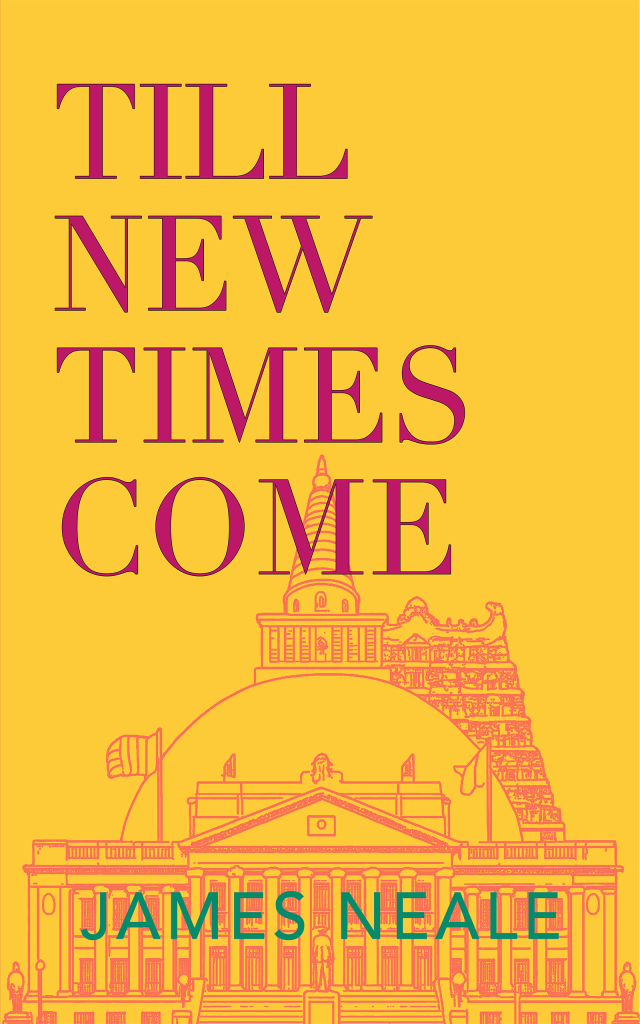
In Till New Times Come, Bandaranaike’s final hours provide a setting for reflecting on choices whose consequences extended far beyond his lifetime. Those choices emerged from a society in which language, religion and history had become powerful claims on the state.
The tragedy was that people who belonged to the same island increasingly came to believe that their security depended on defeating one another’s vision of it. A more generous future would begin by accepting that Sri Lanka can hold more than one account of belonging.