Sri Lanka’s civil war grew out of decades of political exclusion, failed agreements and escalating violence. To understand why fighting engulfed the island in 1983, we must look beyond the immediate trigger to the choices that gradually weakened the possibility of living together.

When Sri Lanka became independent in 1948, civil war was not inevitable. There were tensions between communities, inequalities inherited from colonial rule and competing ideas about the country’s future. But there were also opportunities to build a state in which different languages, religions and identities could belong.
Over the following decades, those opportunities narrowed. Disputes over citizenship, language, education and political power became increasingly difficult to resolve. Peaceful demands gave way to separatism and armed struggle. Repeated attacks on civilians deepened fear and made compromise harder to defend.
The war emerged from this history of decisions and consequences.
Independence and the question of belonging
British rule left Ceylon, as Sri Lanka was then known, with an administration in which English provided access to influence and advancement. A relatively small English-educated elite, drawn from both Sinhala and Tamil communities, enjoyed opportunities unavailable to much of the population.
For many Sinhala speakers, independence therefore carried an unfinished promise. Political freedom had arrived, but the language and institutions of public life still seemed distant from their own experience.
Minorities faced a different concern: whether parliamentary government would adequately protect them when the Sinhalese formed a permanent electoral majority. Early citizenship legislation, which left many plantation Tamils of Indian origin without citizenship and voting rights, gave that concern particular force. Their circumstances differed from those of Sri Lankan Tamils in the north and east, but their exclusion raised a wider question about membership of the new nation.
Why the Sinhala Only Act mattered
In 1956, S.W.R.D. Bandaranaike came to power promising political and cultural change. His government’s Official Language Act replaced English with Sinhala as the country’s sole official language.
For supporters, this opened the state to people long disadvantaged by English. It recognised the language of the majority and challenged the authority of a privileged minority.
For Tamil speakers, however, it created a new barrier. Access to government employment and dealings with public institutions now depended increasingly on another community’s language. A reform presented as emancipation to one constituency was experienced as exclusion by another.
Tamil opposition included peaceful demonstrations. These were followed by anti-Tamil violence in 1956, with further widespread violence in 1958. Language had become bound up with employment, dignity and physical security.
The damage done by broken agreements
There were attempts to find a political settlement.
In 1957, Bandaranaike reached an agreement with the Tamil leader S.J.V. Chelvanayakam. The Banda–Chelva Pact proposed regional councils and arrangements addressing Tamil concerns. Facing strong opposition, Bandaranaike abandoned it in 1958.
Its collapse damaged more than a particular set of proposals. It weakened confidence that negotiation could produce lasting change.
Later, an agreement between Chelvanayakam and Dudley Senanayake also failed to deliver the expected reforms. Each disappointment made it harder for Tamil parliamentary leaders to persuade their supporters that patience and compromise would succeed.
A generation losing confidence
During the 1970s, disputes over university admissions added to Tamil grievances. Changes intended to redistribute educational opportunities disadvantaged sections of the Tamil student population, particularly those competing for highly sought-after places.
For young people, these were immediate questions about their futures: whether qualifications would lead to university, a profession and a secure livelihood.
Meanwhile, the 1972 constitution confirmed Sinhala’s official status and gave Buddhism the foremost place. Political developments increasingly suggested to many Tamils that their language and identity occupied a subordinate position.
Tamil politics consequently moved towards more radical demands. By 1976, the Tamil United Liberation Front was calling for a separate state, Tamil Eelam. Armed groups offered another answer: independence through force.
Black July: the decisive rupture
The immediate turning point came in July 1983, after an LTTE ambush killed thirteen Sri Lankan soldiers.
Anti-Tamil violence followed in Colombo and elsewhere. Tamil civilians were killed, homes and businesses were destroyed, and large numbers of people were displaced or fled abroad.
The people attacked were not responsible for the ambush. Yet their ethnicity made them targets.
Black July demonstrated a catastrophic failure of protection. Human Rights Watch’s historical account describes officially promoted violence, rather than merely a spontaneous eruption of communal anger. The consequences extended far beyond the destruction itself: families lost confidence in their safety, and militant organisations gained recruits and support.
Although armed violence had begun earlier, 1983 is generally taken as the beginning of the civil war that continued until 2009.
Grievance and the choice of violence
Discrimination and insecurity help explain the growth of Tamil militancy. They do not excuse what militant organisations subsequently did.
The Liberation Tigers of Tamil Eelam, or LTTE, became the dominant separatist force. Its campaign included attacks on civilians and the violent suppression of Tamil opponents. State forces also committed grave abuses against civilians. These actions created further grievances and strengthened the conviction that survival depended on defeating the other side.
Nor did either community speak with one voice. Tamil political aspirations cannot simply be equated with the LTTE, or Sinhala opinion with the policies of successive governments.
Recognising those distinctions matters. Otherwise, an explanation of the war risks repeating the collective judgements that helped sustain it.
Could the war have been avoided?
No one can establish with certainty what a different history would have produced.
Nevertheless, there were choices: protecting citizenship, recognising both languages, honouring agreements, safeguarding peaceful protest and holding perpetrators of violence accountable. Their cumulative failure helped turn political disagreement into a struggle increasingly conducted through force.
Bandaranaike was an important figure in that history, but he was not its sole author. He died in 1959, almost twenty-four years before Black July. Later governments, political leaders and militant movements made decisions for which they bore their own responsibility.
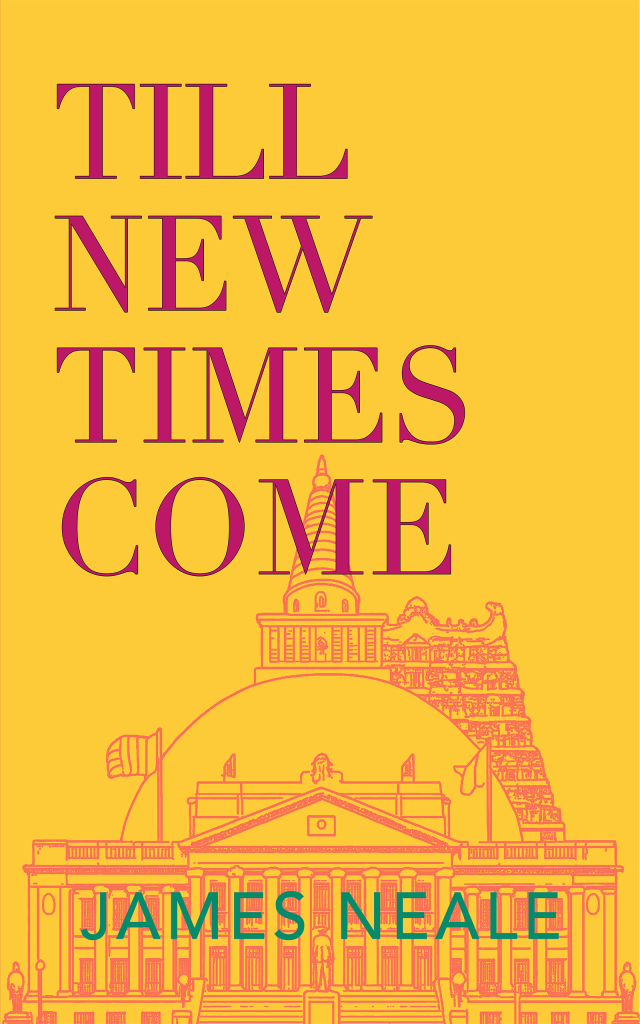
In Till the New Times Come, the distance between those early choices and their later consequences becomes a subject of imaginative reckoning. A dying prime minister encounters a future he could never have known.
The historical question behind those imagined encounters remains: how did a country with opportunities for accommodation come to lose so much confidence in them?