In 1981, the burning of Jaffna Public Library destroyed tens of thousands of books and irreplaceable manuscripts. Two years before Black July, the attack became a powerful symbol of cultural loss and deepening mistrust in Sri Lanka.

A library holds more than the words on its shelves. It preserves the work of earlier generations and makes it available to those who follow. It offers a place to study, to question and to discover that the world is larger than one’s immediate surroundings.
When Jaffna Public Library was deliberately burned during the violence of late May and early June 1981, the loss reached beyond its walls. For many Tamils, the destruction represented an attack on their history, their achievements and their place in Sri Lanka.
The building would eventually be restored. Much of what it had contained could never be recovered.
A library built by a community
Jaffna Public Library grew from an initiative begun by K.M. Chellappah in 1933. What started as a small collection developed through local support into an important public institution. Its purpose-built main building opened in 1959.
By 1981, the collection held approximately 97,000 books and manuscripts. These included rare historical materials and palm-leaf manuscripts, alongside the resources of a working public library.
Its importance was both scholarly and ordinary. Researchers could consult historical documents; students could prepare for examinations; readers could encounter literature beyond the books their families could afford.
A public library makes knowledge a shared resource. In Jaffna, its destruction therefore struck at something built through years of collective effort.
What happened in 1981?
The burning occurred amid violence surrounding the District Development Council elections.
An attack on police at a Tamil United Liberation Front rally was followed by reprisals across Jaffna. The library was among the targets, along with shops, political premises and a newspaper office. The American Institute for Sri Lankan Studies identifies members of the Sri Lankan police among the mob responsible for the arson.
Accounts differ over the precise night on which the library was set alight, placing it within the violence spanning 31 May and the beginning of June. The central facts are clearer: the fire was deliberate, and the destruction of the collection was devastating.
In testimony reported from the Lessons Learnt and Reconciliation Commission in 2010, former district minister B. Wijekoon also attributed the burning to policemen stationed in Jaffna on election duty. His account disputed allegations about the presence of particular ministers, illustrating the need to distinguish police involvement from claims about who ordered or directed the attack.
What was lost?
The figure most often cited is approximately 97,000 books and manuscripts. That number conveys the scale of the destruction, but it cannot express the different kinds of loss.
Some published books could, in principle, be replaced. Unique documents, old manuscripts and historical records presented a different problem. A new copy could not simply be ordered.
Reporting from Jaffna in 2014 described the destruction of centuries-old palm-leaf records and recorded the continuing grief of readers and librarians. Former University of Jaffna chief librarian Rohini Pararajasingam stressed the distinction between acquiring new books and replacing the original collection: rebuilding could not restore what had disappeared.
There was also a loss of possibility. Each destroyed source might have supported a future investigation, answered a question or challenged an accepted account. Its value extended to readers who had not yet been born.
Why the burning mattered politically
A library is an unusual target if the purpose of violence is narrowly military. Its destruction carries a different message.
For a community already anxious about language rights and political recognition, an attack on a major cultural institution could be understood as an assault on its right to remember and to belong.
The American Institute for Sri Lankan Studies describes the burning as an act of cultural destruction, widely perceived as an attempt to erase Tamil identity and history.
That perception mattered. Political trust depends partly on confidence that institutions will protect what communities value. When members of the police participate in destroying such an institution, the damage extends to the credibility of the state itself.
The library’s burning did not make war inevitable. It did, however, make reassurance harder to offer and harder to believe.
A loss that concerned all Sri Lankans
The library’s importance to Tamil cultural life did not make its destruction a concern for Tamils alone.
The Sri Lankan librarian and bibliographer H.A.I. Goonetileke condemned the attack in a letter written in 1981. His response treated the destruction as something that should outrage people across political, ethnic and religious divisions.
That wider recognition remains essential. Historical collections may have particular significance for one community while also belonging to the intellectual inheritance of a country.
To acknowledge the specific injury suffered by Tamils is also to recognise what Sri Lanka lost: evidence of its past, resources for scholarship and an institution through which citizens could learn from one another.
Rebuilding the library
An initial reopening took place in 1984, but renewed conflict interrupted the library’s recovery. The building suffered further damage during the war.
A later restoration returned it to public use in 2003. Groundviews’ architectural account traces these repeated attempts to recover the institution, from the early reconstruction to the restoration of the original design.
The restored library represents an achievement. Readers again have a place to study, and new collections can serve new generations.
Yet restoration has limits. A repaired building and replenished shelves cannot reproduce every manuscript, newspaper or historical document that once stood there. Recovery and irreversible loss exist together.
From the library to Black July
Two years later, Black July brought anti-Tamil violence on a much larger scale.
Looking back, the burning of the library belongs within the sequence of events through which mistrust deepened. It helps explain why later violence was experienced through memories of earlier failures of protection.
But remembering it only as a step towards war would diminish its meaning. The destruction deserves attention in its own right: as an attack on learning, on public life and on the patient work of preserving a past.
For readers of historical fiction, that loss has a particular resonance. Imagination can explore the silences of history, but it depends on the records that survive. When those records are destroyed, the silence grows.
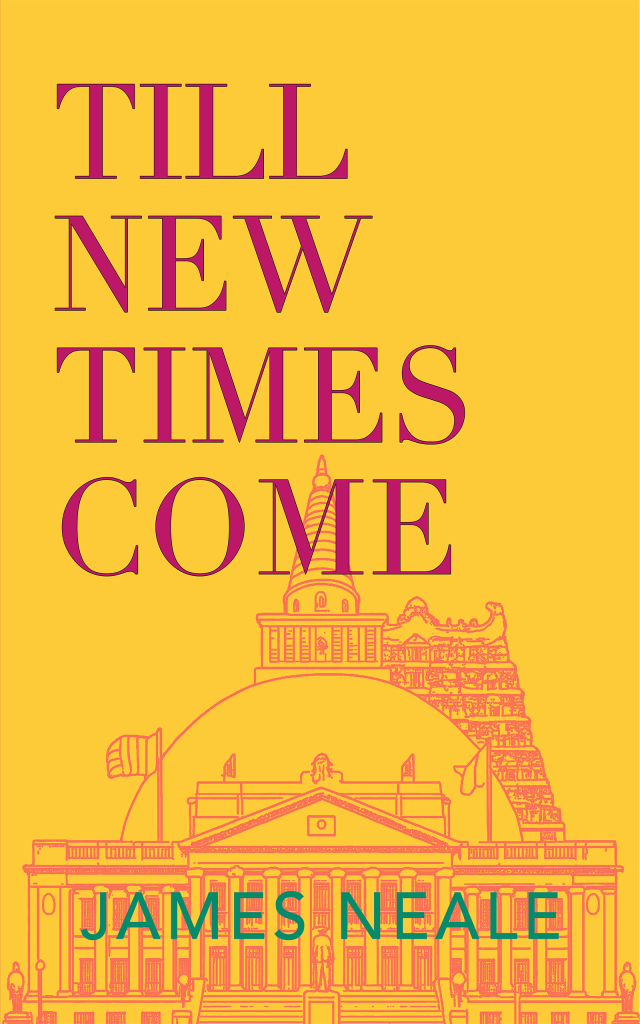
In Till New Times Come, a dying Bandaranaike encounters an imagined future beyond his knowledge. The burning of Jaffna Library belongs to that later history of damaged relationships and lost possibilities—a reminder that a country’s inheritance includes the institutions through which its people understand themselves.