Before she became the world’s first woman prime minister, Sirimavo Bandaranaike had spent nearly twenty years raising a family, undertaking voluntary work and living close to the centre of Ceylon’s political life. Understanding those years helps us see the woman whose future was transformed by her husband’s assassination.

Sirimavo Bandaranaike is usually introduced through the distinction that secured her place in history. On 21 July 1960, she became the world’s first woman prime minister. Yet that achievement can overshadow the life she had already lived: her upbringing, her marriage, her work among rural women and her experience of a household in which public demands continually entered private life.
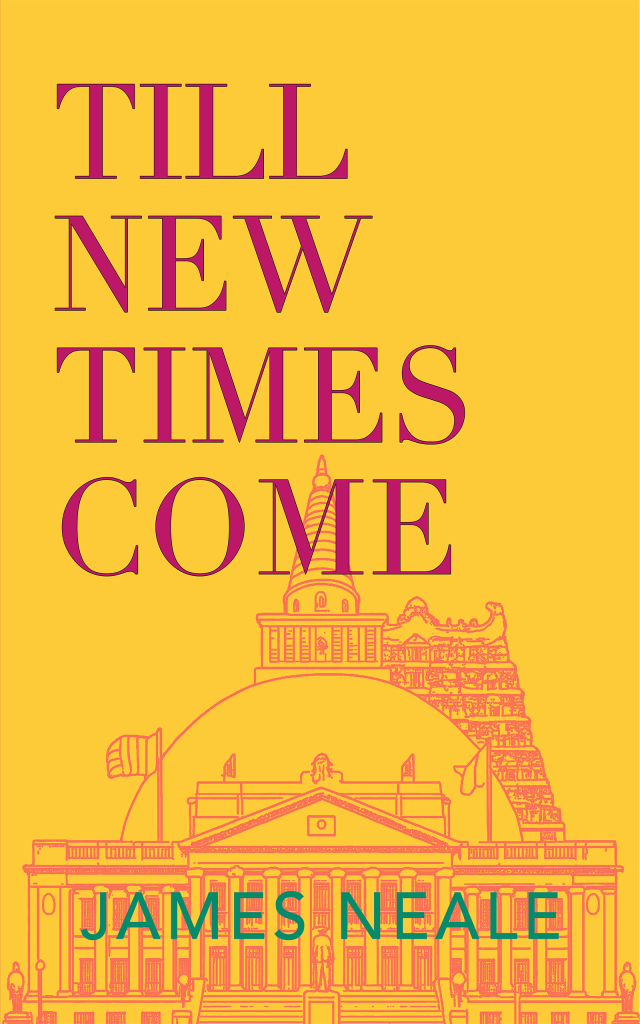
In Till the New Times Come, she appears before that historic transformation. She is Sirima, the wife of a wounded man, facing the possible loss of her husband and the father of their children. Readers know something she cannot yet know: that within a year, she will hold the office he is about to leave behind.
A marriage between two influential families
Born Sirimavo Ratwatte on 17 April 1916, she came from a prominent Kandyan family. Her father, Barnes Ratwatte, held the position of Disawe, and she was educated at St Bridget’s Convent in Colombo. In 1940, she married S.W.R.D. Bandaranaike, already an established political figure.
Their marriage brought together two influential families from different parts of Ceylon’s Sinhala elite: her Kandyan background and his low-country ancestry. They had three children—Sunethra, Chandrika and Anura—while his career carried him through ministerial office, opposition and eventually the premiership.
For a novelist, this marriage offers a way to approach the relationship between a public life and the family that sustains it. Political decisions are remembered through speeches, legislation and elections. Within a marriage, they are also experienced through absence, uncertainty, competing obligations and the demands placed on a household.
Those private experiences are harder to recover from the historical record. They require particular care when history becomes fiction.
A public life of her own
Descriptions of Sirimavo’s early years often emphasise her role as a wife and mother. That leaves an important part of her experience out of view.
In 1941, she joined the Lanka Mahila Samithi, a women’s organisation working to improve rural living conditions. Its activities embraced health, education, village industries and practical measures to relieve poverty. Her involvement took her into villages and brought her into contact with families whose circumstances differed greatly from her own.
She remained involved for almost two decades, holding positions including treasurer and vice-president before becoming president in 1959. When she entered national leadership, she therefore brought experience of voluntary organisation and community work, even though she had not followed her husband’s parliamentary career.
This matters to the way her story is told. Her husband’s name and the grief surrounding his death were powerful forces in her political emergence. But she also had experience, relationships and responsibilities of her own.
Living beside political power
Throughout their marriage, Sirimavo encountered politicians, visiting dignitaries and diplomats through her role as hostess. She was close to the social world in which political relationships were formed and maintained.
Such proximity does not tell us exactly what she thought about every decision her husband made. Nor should later events encourage us to imagine that her own premiership was inevitable.
It does, however, complicate the familiar picture of a woman entering politics from an entirely private existence. Long before she held office, she had observed the demands of political life at close quarters.
September 1959: a family’s catastrophe
Bandaranaike was shot at his Colombo home on 25 September 1959 and died the following day. The assassination was a national crisis, but it was also a sudden and devastating rupture in a family’s life.
Historical accounts necessarily follow the gunman, the conspiracy, the medical treatment and the struggle over succession. Fiction can pause over another dimension: what it means to wait while someone familiar becomes a patient whose survival is uncertain.
In Till the New Times Come, Sirima helps bring the story back to that human scale. The man in the hospital bed is a prime minister, but he is also her husband. The country’s unfinished business exists alongside the unfinished business of a marriage.
The novel’s imagined private moments should be understood as fiction. They explore emotional possibilities around documented events, rather than claiming to reproduce conversations preserved in the historical record.
A future still unseen
After the assassination, Sirimavo was persuaded to take the leadership of the Sri Lanka Freedom Party. She led it to victory in the July 1960 general election and became prime minister.
That later achievement gives her presence in the novel a particular poignancy. Readers encounter her at a moment of vulnerability while knowing that extraordinary responsibilities lie ahead.
But the woman beside Bandaranaike deserves attention before that future arrives. Her life already contained family obligations, public service and sustained contact with the country beyond her privileged upbringing.
To see her only as the widow who became prime minister is to begin her story too late.